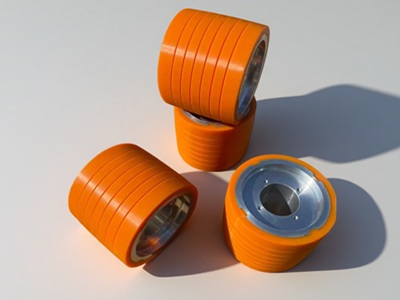
Cast polyurethane material selection starts with the job the part must do. Describe the load, movement, contact media and temperature profile before choosing a formulation or Shore hardness. Then agree on an acceptance test that measures the function you need: traction, allowable deflection, sealing, wear or vibration control.
This guide helps OEM engineers prepare a specification for custom wheels, rollers and dampers. It separates initial material screening from component validation so a promising datasheet can become a useful design decision.
Cast Polyurethane Material Selection: Which System Should You Consider?
Polyol family helps narrow the options, but does not define a finished component’s performance. Compare complete formulations at the required hardness, using results with stated test conditions.
| Application priority | Candidate direction | Evidence to request |
|---|---|---|
| Frequent water or humidity exposure | Screen hydrolysis-resistant systems, including suitable polyether formulations. | Property retention after exposure to the actual water and cleaning conditions. |
| Mechanical wear in relatively dry service | Compare polyester and other wear-focused formulations. | Wear and tear data relevant to the contact surface; component trial results. |
| Combined wet service and demanding mechanical duty | Compare hydrolysis-resistant grades, including suitable PCL-based candidates where supplier data supports the choice. | Mechanical properties before and after media exposure, plus cost and processing requirements. |
| Oil, fuel or process chemical contact | Use compatibility data for the exact formulation and liquid. | Exposure temperature, duration, volume change and retained mechanical function. |
For background on commercial cast elastomer systems, see Covestro’s TDI prepolymer overview. These supplier descriptions are screening references, not test results for a Kubis component.
If the production process is still undecided, first review cast polyurethane versus TPU for industrial components.
Turn the operating conditions into a testable specification
Replace broad requests such as “oil resistant” or “long life” with conditions and limits. The following inputs help a manufacturer propose a formulation and a useful prototype trial.
| Design input | What to provide | Acceptance question |
|---|---|---|
| Temperature | Minimum, normal and peak part temperature; time at each; cooling periods. | Does the part retain its required function after this exposure? |
| Media | Liquid identity, concentration, contamination, cleaning agent and immersion or splash contact. | Are dimensional and property changes acceptable? |
| Mechanical duty | Load per part, speed, impact, deformation and operating hours per cycle. | Are deflection, temperature rise and damage within agreed limits? |
| Contact | Counterface, abrasive particles, lubrication and edge loading. | Does the trial reproduce the actual wear mechanism? |
| Geometry and interfaces | Drawing, substrate, mounting method and critical dimensions. | Does the complete assembly remain secure and dimensionally usable? |
| Service target | Hours or cycles and the specific replacement trigger. | What measured change makes the part unacceptable? |
Shore hardness is one input to this specification. A softer part may improve compliance but change contact area and deflection. A harder part may provide support while transmitting more force to the assembly. Shore A and Shore D use different scales; their numerical values are not directly interchangeable. Compare candidates through load–deflection or component tests when function depends on stiffness.
For equipment used in winter, specify cold starts as well as normal running conditions. See our cold-climate polyurethane guide for a separate discussion.
Three application examples: requirements, design direction and validation
The examples below explain selection decisions. They do not report certified performance or completed service-life trials.
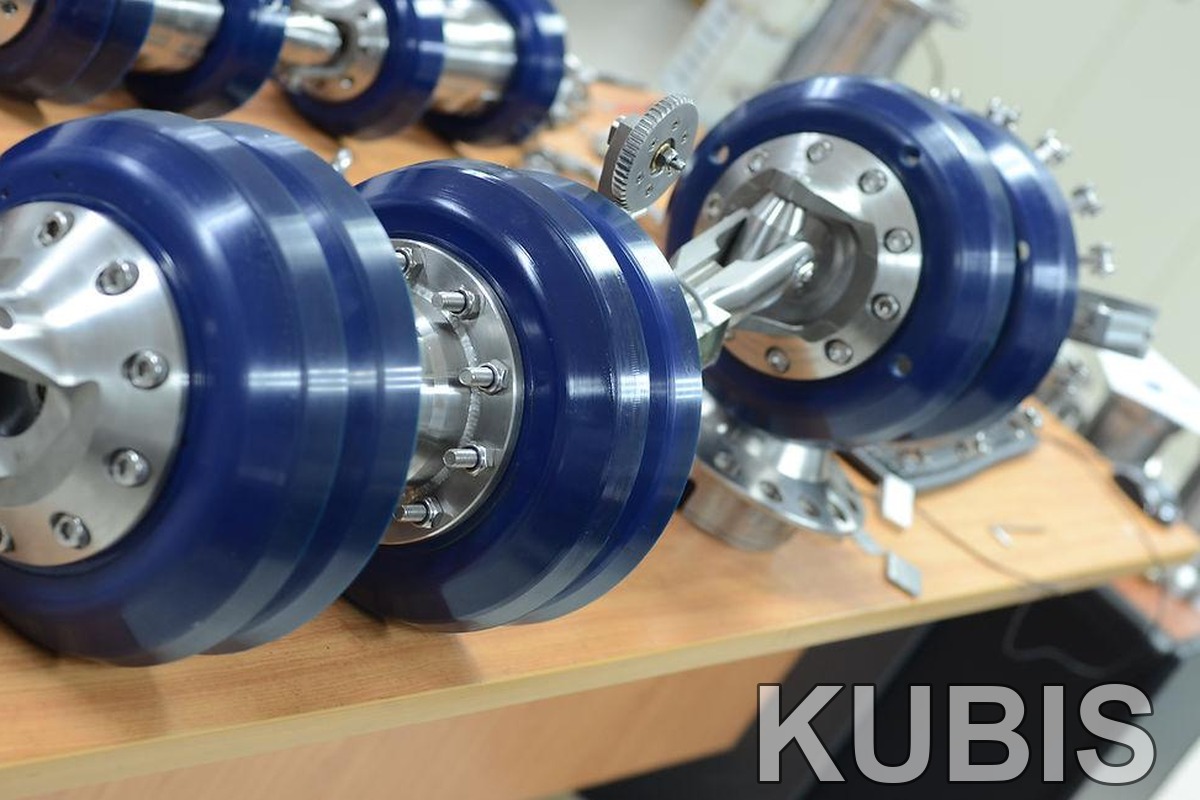
1. Pipeline inspection wheel: supporting core and compliant tread
Requirement: support the inspection tool while maintaining useful contact with the pipe wall, with water exposure and possible oil-related service considered separately.
Design direction: a proposed dual-hardness construction uses a 75 Shore D polyether core and a 60 Shore A outer layer. The outer formulation must be selected for the specified liquids as well as traction and tear behavior. A shared formulation for different environments remains a proposal until both environments have been evaluated.
Validation: test the finished wheel in each actual medium at the intended temperature. Record tread dimensions, hardness and visible condition before and after exposure, then check traction, load behavior and adhesion between layers. Include cleaning between operating cycles.
Selection lesson: the tread and core have different jobs. Neither hardness value establishes chemical compatibility, bond durability or service life. Drinking-water suitability also requires its own intended-use assessment.
2. Hydraulic breaker damper: controlling movement under repeated impact
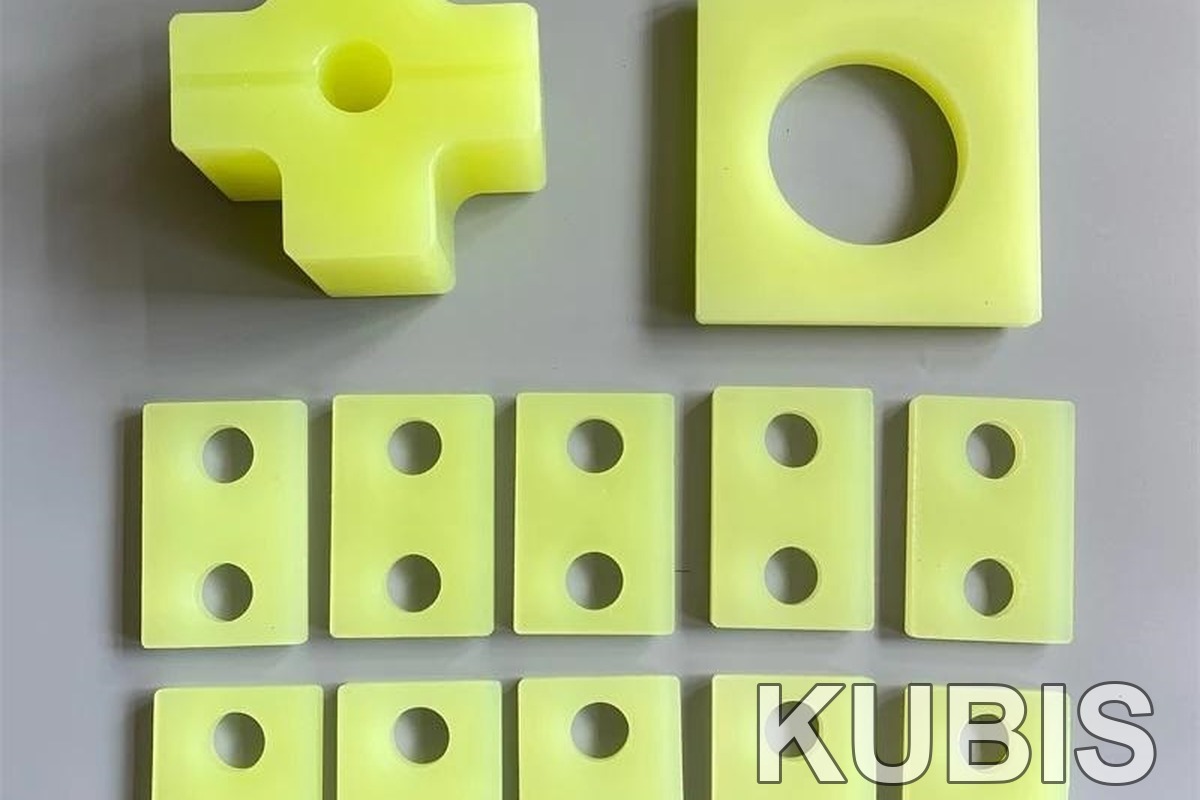
Requirement: manage movement and repeated loading within the breaker housing while preserving the necessary clearance and support.
Design direction: select the formulation together with the pad’s position, installed compression and geometry. Different positions may need different behavior. A harder top support and a more compliant lateral element should be assessed against their individual functions rather than treated as a universal arrangement.
Validation: measure load–deflection behavior and permanent deformation after representative cycling. Inspect edges, contact surfaces and installed dimensions. If noise or vibration reduction is a project requirement, compare the complete breaker assembly under controlled operating conditions.
Selection lesson: a pad’s hardness alone does not predict damping or prove a reduction in sound level.
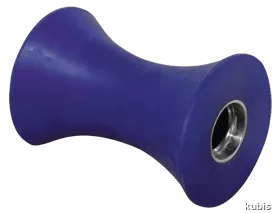
3. Industrial roller: balancing grip, surface protection and wear
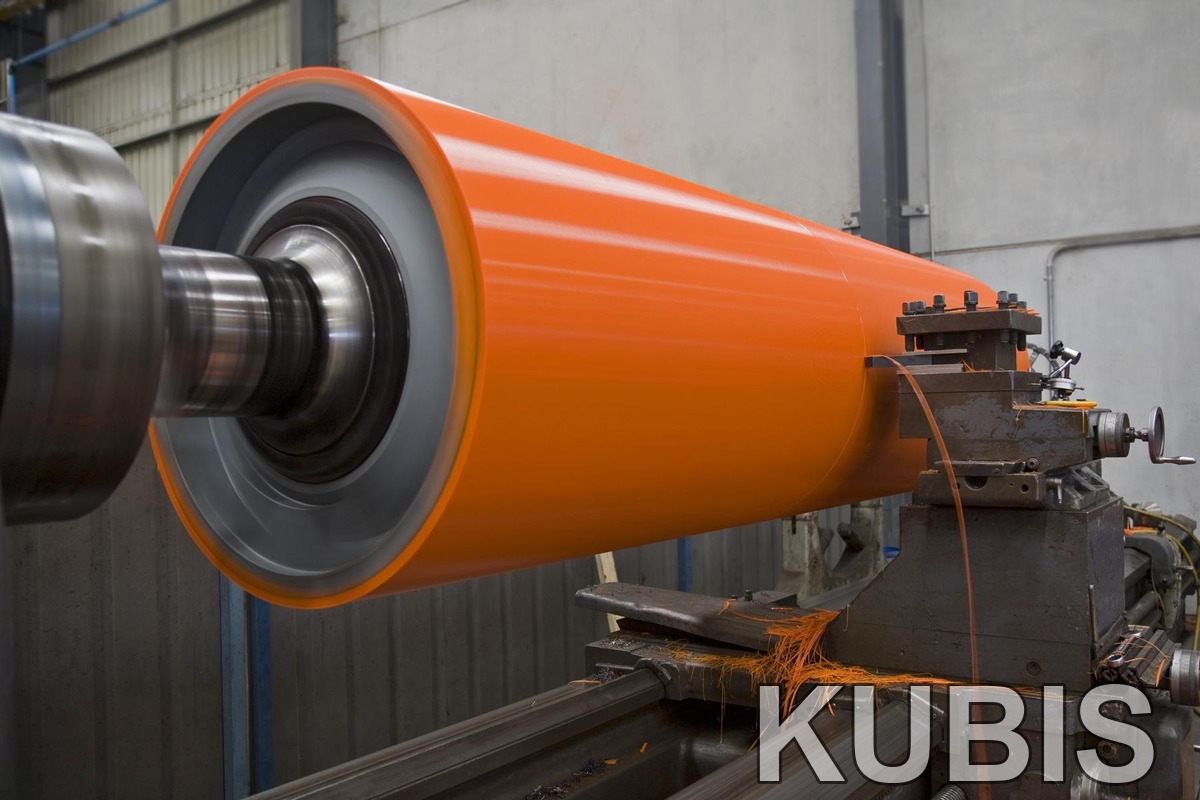
Requirement: move or guide the workpiece with adequate grip and acceptable marking while the cover remains attached to its core.
Design direction: consider line speed, nip load, cover thickness, workpiece finish and any oil or cleaning contact together. Compare candidate covers against the required traction and allowed deformation.
Validation: run the roller against representative workpieces. Track slip, marks, cover temperature, diameter change and the bonded interface. Include starts, stops and cleaning if they form part of the production cycle.
Selection lesson: wear performance has value only when the cover also meets grip, finish and bond requirements.
How to validate a shortlisted formulation
- Agree on failure limits. Define unacceptable wear, deflection, slip, dimensional change, cracking or bond separation before testing.
- Document the starting condition. Record formulation identification, cure history, dimensions and selected properties.
- Screen representative exposures. Evaluate actual media and temperatures; include combined exposure and loading when their interaction matters.
- Test the component. Use the real mounting, counterface and duty cycle wherever practical.
- Review the changes. Compare results with the agreed limits and retain an approved reference sample for subsequent production.
A short immersion or heat-aging trial can reject an unsuitable candidate. It cannot automatically establish a multi-year life. Any accelerated-life prediction needs a justified relationship to the actual failure mechanism and service conditions.
What to review when an existing part fails
- Swelling or loss of function: identify the exact liquid and cleaning sequence before simply increasing hardness.
- Edge damage: inspect local loading, unsupported edges and contact geometry alongside tear behavior.
- Permanent flattening: review installed compression, sustained load and temperature.
- Cover separation: examine substrate preparation, adhesive selection, interface geometry and cycling.
- Unexpected temperature rise: review deformation frequency, loading and cooling with the formulation supplier.
Common material-selection questions
Can two polyurethane parts with the same hardness behave differently?
Yes. Request the formulation’s relevant property data and test the required component function. A hardness match alone is insufficient for approving a replacement.
Can one formulation serve both water and oil applications?
Possibly, but each intended liquid and temperature must be assessed. Approval for one exposure does not establish suitability for another.
Does a brief high-temperature test establish continuous service capability?
No. Specify exposure duration, loading and the allowed performance change. Short peaks and continuous operation require different validation conditions.
What should an engineer send for an initial review?
Send a drawing, operating conditions, the required function and replacement criteria. For an existing failure, include photographs and, where possible, a used part and its service history.
Discuss your cast polyurethane component with Kubis Tech
Kubis Tech works on custom cast polyurethane components. An application review can help define candidate materials, prototype requirements and the evidence needed for a production decision.
Send your drawing and operating conditions to the Kubis Tech team. Include the current material, main failure problem and expected production quantity if available.